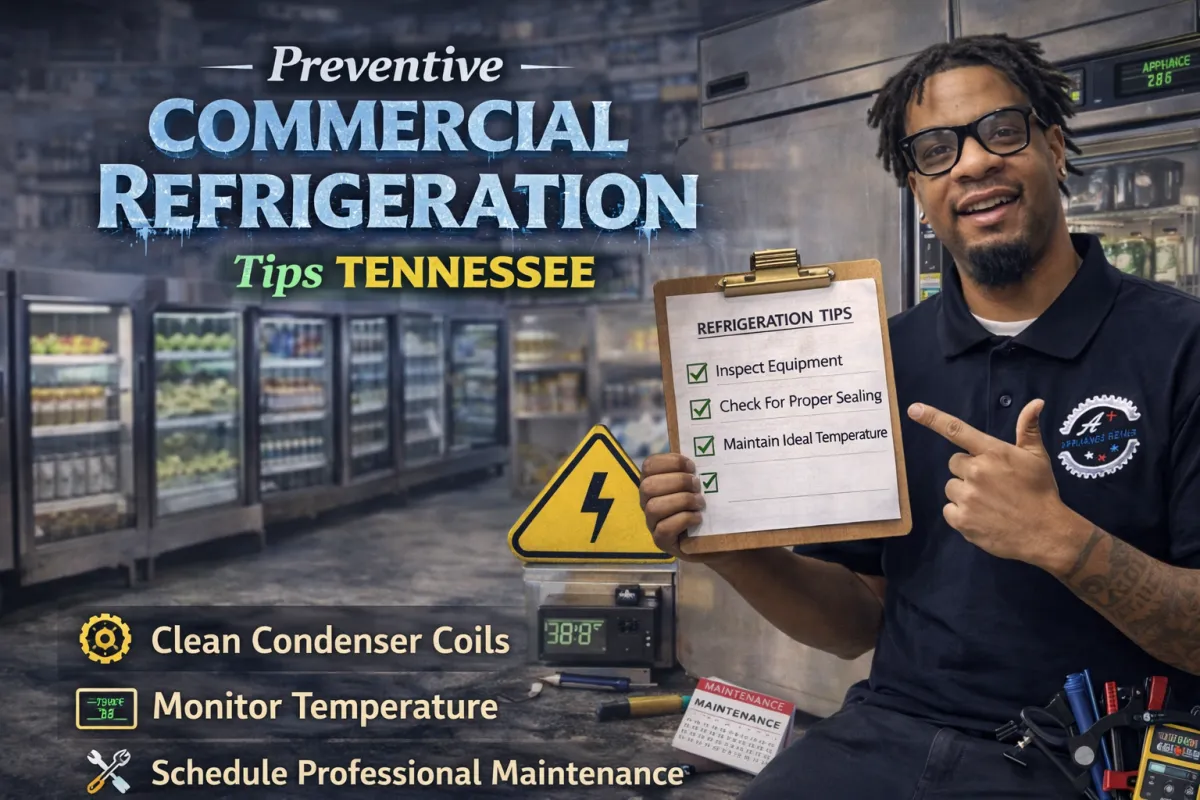
Preventive Commercial Refrigeration Tips Tennessee
Preventative maintenance is not just about fixing problems. It is about protecting your business before problems begin. When Tennessee businesses care for their commercial refrigeration systems consistently, they safeguard their inventory, control energy costs, and keep daily operations running smoothly. - A+ Appliance Repair
Introduction
Commercial refrigeration is the backbone of countless businesses throughout Tennessee. Restaurants, grocery stores, convenience markets, bakeries, and food service operations rely on dependable cooling systems to protect inventory and maintain safe food storage. When refrigeration systems function efficiently, operations run smoothly. When they fail, the consequences can be immediate and costly.
Preventative Commercial Refrigeration Tips Tennessee businesses follow can dramatically reduce the PreventivePreventive maintenance is not complicated. In fact, many tasks are simple routines that staff can perform daily or weekly. Combined with periodic professional inspections, these steps create a powerful maintenance strategy that keeps refrigeration equipment dependable and efficient.
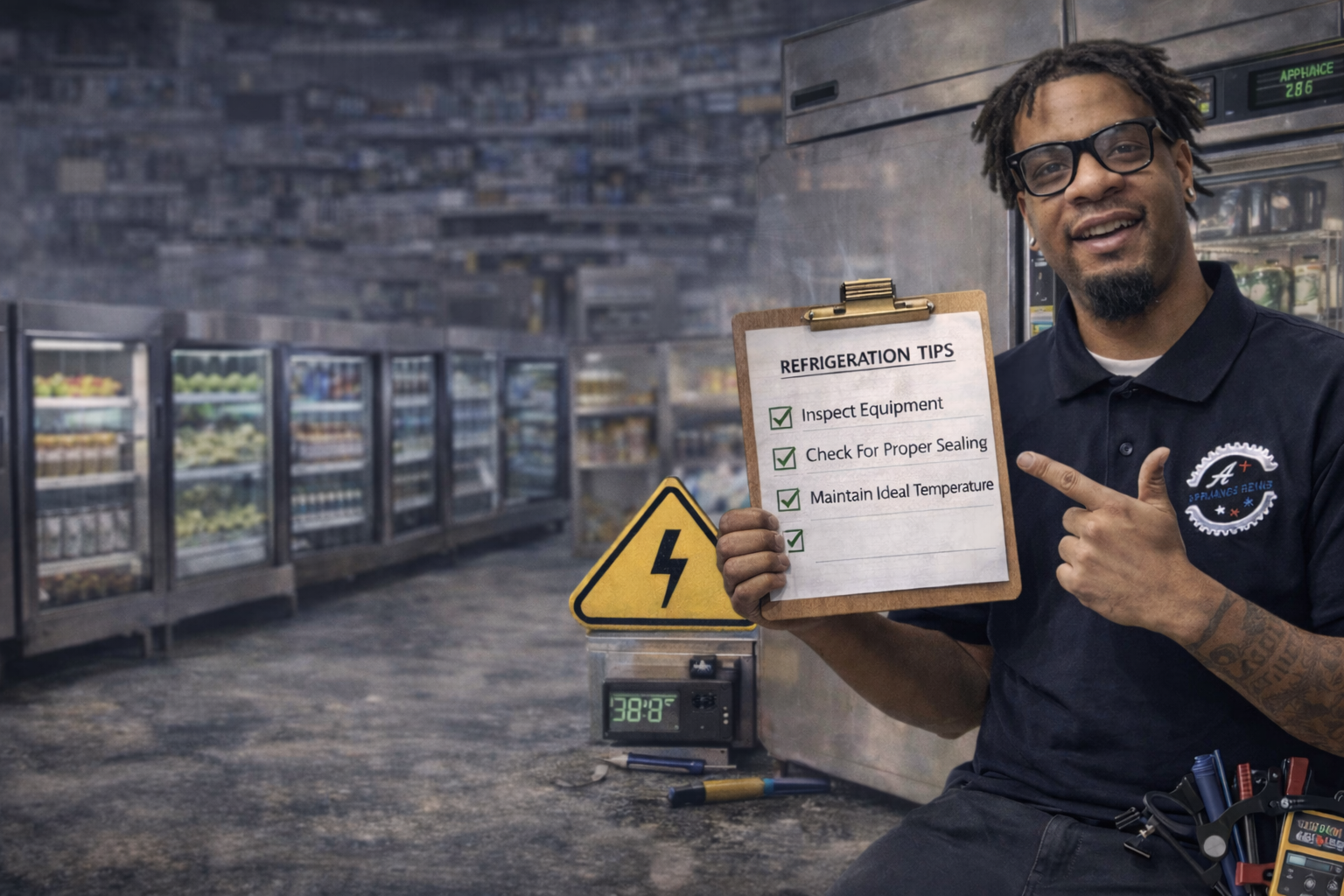
Why Preventive Maintenance Matters for Tennessee Businesses
Preventive maintenance is one of the most practical investments a business can make. Rather than waiting for equipment failure, proactive service focuses on identifying potential issues before they escalate into serious problems.
In a busy kitchen or retail environment, refrigeration equipment operates continuously. Compressors run day and night. Fans circulate air. Condensers remove heat from the system. Over time, wear and tear naturally develop. Preventative maintenance ensures these components continue functioning properly.
Businesses that implement preventative refrigeration care often experience fewer disruptions, lower repair costs, and improved operational stability. A well-maintained refrigeration system also performs more consistently, helping businesses avoid costly inventory losses.
How Reliable Refrigeration Protects Inventory and Profits
Perishable goods depend on precise temperature control. Even minor fluctuations can compromise food quality or create safety risks.
Reliable refrigeration ensures that:
Food products remain fresh and safe
Inventory loss due to spoilage is minimized
Health regulations are consistently met
Business operations continue uninterrupted
When refrigeration fails unexpectedly, the financial impact can be severe. Thousands of dollars in food inventory may be lost in a matter of hours. Preventative Commercial Refrigeration Tips Tennessee businesses apply are designed to prevent these scenarios and safeguard profitability.
Understanding Commercial Refrigeration Systems
Key Components of a Commercial Refrigeration System
Commercial refrigeration systems consist of several interconnected components working together to remove heat from storage spaces.
Important components include:
Compressor
The compressor acts as the heart of the refrigeration system. It pressurizes the refrigerant and circulates it throughout the system.
Condenser Coils
Condenser coils release heat from the refrigerant into the surrounding environment. When these coils become dirty, system efficiency drops significantly.
Evaporator Coils
Evaporator coils absorb heat from inside the refrigerator or freezer compartment.
Expansion Device
This component regulates refrigerant flow and reduces pressure as refrigerant enters the evaporator.
Fans and Motors
Fans circulate air across coils to maintain proper heat transfer and consistent temperatures.
When each component functions properly, the system maintains stable cooling performance.
How Refrigeration Systems Work in Restaurants and Businesses
Commercial refrigeration systems operate on a continuous heat-exchange cycle. The process begins when the compressor pressurizes the refrigerant gas. This heated refrigerant travels through condenser coils, where it releases heat and condenses into liquid.
The liquid refrigerant then passes through an expansion valve. Pressure drops rapidly. The refrigerant becomes cold and enters the evaporator coils.
Inside the evaporator, the refrigerant absorbs heat from the refrigerator compartment. Fans circulate air across these coils to ensure even cooling. The refrigerant then returns to the compressor, and the cycle repeats.
This process occurs constantly. Any obstruction, contamination, or component failure can disrupt the cycle and reduce cooling performance.
Common Types of Commercial Refrigeration Equipment Used in Tennessee
Tennessee businesses use a wide range of refrigeration equipment depending on their industry.
Common units include:
Walk-in coolers
Walk-in freezers
Reach-in refrigerators
Display refrigeration cases
Prep tables
Undercounter refrigerators
Ice machines
Each type of equipment requires regular maintenance to ensure reliable performance.
Why Preventive Commercial Refrigeration Tips Tennessee Businesses Should Follow
Reducing Expensive Emergency Repairs
Emergency refrigeration repairs often occur at the worst possible time. Busy dinner rushes, holiday weekends, or overnight hours can quickly become chaotic when equipment fails.
Preventative maintenance reduces the likelihood of sudden mechanical failure by identifying small issues early. A worn fan motor, dirty condenser coil, or loose electrical connection can be corrected long before it causes a complete system shutdown.
Extending the Lifespan of Commercial Refrigeration Equipment
Commercial refrigeration equipment represents a significant investment. Many units cost thousands of dollars to replace.
Routine maintenance protects that investment. Clean coils, calibrated sensors, and properly lubricated components allow systems to operate with less mechanical strain. As a result, equipment often lasts several years longer.
Improving Energy Efficiency and Lowering Utility Costs
Refrigeration systems consume substantial energy. When components become dirty or worn, the system must work harder to maintain the same temperature.
This increased workload leads to higher electricity consumption.
Preventative maintenance restores efficiency by ensuring coils remain clean, airflow is unobstructed, and temperature controls function correctly.
Protecting Food Safety and Health Compliance
Temperature control plays a vital role in food safety regulations. Health inspectors require strict adherence to safe refrigeration temperatures.
Poorly maintained equipment can struggle to maintain proper cooling ranges. Preventative care helps businesses remain compliant with health standards and avoid potential violations.
Early Warning Signs Your Refrigeration System Needs Attention
Inconsistent Cooling Temperatures
Temperature fluctuations often signal an underlying issue. Faulty sensors, dirty coils, or failing compressors may cause irregular cooling performance.
Excessive Frost or Ice Buildup
Ice accumulation inside freezers or evaporator coils may indicate airflow restrictions or malfunctioning defrost systems.
Unusual Noises or Vibrations
Grinding, rattling, or buzzing sounds can signal mechanical wear. Fan motors, compressors, or loose components may require inspection.
Water Leaks Around the Unit
Water pooling near refrigeration units often results from clogged drain lines or damaged condensate systems.
Rising Energy Bills Without Explanation
An unexpected increase in energy costs may indicate refrigeration systems are working harder than necessary due to inefficiencies.
Daily Preventive Commercial Refrigeration Tips Tennessee Staff Can Follow
Checking Door Seals and Gaskets
Door gaskets create an airtight seal. Damaged or worn gaskets allow warm air to enter the refrigeration compartment, forcing the system to work harder.
Monitoring Temperature Consistency
Staff should regularly check temperature displays to ensure units remain within safe cooling ranges.
Keeping Doors Closed as Much as Possible
Frequent door openings introduce warm air into the system. Limiting unnecessary door openings improves efficiency.
Ensuring Proper Airflow Inside the Unit
Air circulation is essential for even cooling. Overstocked shelves can block airflow and create temperature inconsistencies.
Weekly Refrigeration Maintenance Tasks
Cleaning Interior Shelves and Surfaces
Clean interior surfaces prevent contamination and maintain sanitary storage conditions.
Inspecting Condenser Fans for Obstructions
Dust, grease, and debris may obstruct condenser fans and reduce heat dissipation.
Checking Drain Lines for Blockages
Drain lines remove condensation. Blockages can cause leaks and water damage.
Monthly Preventive Commercial Refrigeration Tips Tennessee Businesses Should Schedule
Cleaning Condenser Coils for Better Efficiency
Condenser coils collect dust and grease over time. Dirty coils prevent proper heat exchange and force compressors to work harder.
Inspecting Electrical Connections
Loose electrical connections may cause intermittent system failures or electrical hazards.
Examining Evaporator Coils for Frost Buildup
Frost accumulation reduces cooling performance and can restrict airflow.
Testing Temperature Controls and Sensors
Temperature sensors and thermostats must be calibrated accurately to maintain consistent cooling.
Seasonal Maintenance Tips for Tennessee Businesses
Preparing Refrigeration Systems for Hot Summer Months
Tennessee summers bring intense heat. Refrigeration systems must work harder during warmer months. Pre-season maintenance ensures equipment can handle the increased workload.
Managing Humidity Levels to Prevent Excess Moisture
High humidity levels can contribute to frost buildup and condensation problems.
Ensuring Proper Ventilation Around Equipment
Adequate ventilation helps condenser coils release heat effectively.
Common Commercial Refrigeration Problems and How Preventive Care Helps
Compressor Failures and How to Avoid Them
Compressors fail primarily due to overheating or mechanical stress. Regular maintenance helps prevent these issues.
Evaporator Coil Freezing Issues
Airflow restrictions and malfunctioning defrost systems commonly cause evaporator freezing.
Refrigerant Leaks and Performance Loss
Low refrigerant levels reduce cooling efficiency and strain the compressor.
Fan Motor Wear and Reduced Airflow
Fan motors operate continuously. Over time, they may experience mechanical wear.
Energy Saving Preventive Commercial Refrigeration Tips Tennessee Facilities Can Apply
Keeping Condenser Coils Clean
Clean coils improve heat transfer and reduce compressor workload.
Maintaining Proper Temperature Settings
Incorrect temperature settings may increase energy consumption unnecessarily.
Reducing Door Open Time in Busy Kitchens
Shorter door open times help maintain internal temperatures and reduce compressor cycling.
Upgrading to Energy-Efficient Components
Modern refrigeration components are often more energy efficient than older models.
Best Practices for Restaurants, Grocery Stores, and Food Businesses
Organizing Inventory to Improve Air Circulation
Proper inventory organization ensures adequate airflow inside refrigeration units.
Avoiding Overloading Refrigeration Units
Overloaded refrigerators struggle to maintain stable temperatures.
Rotating Stock to Reduce Waste and Cooling Stress
Inventory rotation ensures older products are used first, reducing waste and improving storage efficiency.
The Importance of Professional Refrigeration Inspections
When to Schedule a Professional Maintenance Visit
Professional inspections should occur several times per year, depending on equipment usage.
What Technicians Look for During Preventive Maintenance
Technicians inspect compressors, coils, electrical systems, refrigerant levels, and airflow performance.
Benefits of Routine Commercial Refrigeration Service
Routine service reduces breakdowns, improves efficiency, and extends equipment lifespan.
Creating a Preventative Maintenance Schedule for Your Business
Daily, Weekly, and Monthly Maintenance Planning
Structured maintenance schedules help businesses stay organized and proactive.
Assigning Staff Responsibilities for Basic Maintenance
Staff training ensures routine maintenance tasks are consistently performed.
Tracking Service History and Performance
Maintenance records provide valuable insight into equipment performance over time.
How Preventative Maintenance Helps Avoid Health Code Violations
Maintaining Safe Food Storage Temperatures
Reliable refrigeration ensures food remains stored within safe temperature ranges.
Reducing the Risk of Spoiled Inventory
Preventative maintenance minimizes spoilage risks caused by refrigeration failures.
Ensuring Compliance with Local Health Regulations
Proper refrigeration practices support compliance with food safety regulations.
Cost Savings of Preventative Commercial Refrigeration Tips Tennessee Businesses Use
Avoiding Expensive Emergency Repairs
Preventative maintenance reduces the likelihood of costly emergency service calls.
Reducing Energy Consumption
Efficient refrigeration systems consume less electricity.
Extending Equipment Lifespan
Well-maintained equipment typically operates several years longer than neglected systems.
When It Is Time to Repair or Replace Commercial Refrigeration Equipment
Signs Your Unit Is Nearing the End of Its Lifespan
Frequent breakdowns, rising repair costs, and declining performance may indicate replacement is necessary.
Comparing Repair Costs vs Replacement
Businesses should evaluate long-term costs when deciding whether to repair or replace equipment.
Planning Equipment Upgrades for Long-Term Efficiency
Modern refrigeration systems offer improved energy efficiency and advanced temperature control.
Choosing a Reliable Commercial Refrigeration Service Provider in Tennessee
What to Look for in a Refrigeration Technician
Experienced technicians understand complex refrigeration systems and commercial equipment.
Questions to Ask Before Scheduling Service
Businesses should inquire about experience, certifications, and preventative maintenance programs.
Why Experience with Commercial Equipment Matters
Commercial refrigeration systems differ significantly from residential units and require specialized knowledge.
Conclusion
How Preventive Commercial Refrigeration Tips Tennessee Businesses Use Can Improve Reliability, Efficiency, and Long-Term Savings
Preventative maintenance remains one of the most effective strategies for protecting commercial refrigeration equipment. Consistent inspections, routine cleaning, and professional service ensure systems operate efficiently and reliably.
By implementing Preventative Commercial Refrigeration Tips, Tennessee businesses can reduce costly repairs, improve energy efficiency, and extend the lifespan of valuable equipment. Most importantly, proactive maintenance safeguards inventory and ensures smooth daily operations.
📞 Call: (629) 260-3232
📧 Email: [email protected]
🌐 Website: https://a-plusappliancerepair.com/home
Frequently Asked Questions
What are the most important preventative commercial refrigeration tips Tennessee businesses should follow?
The most important preventative maintenance steps include cleaning condenser coils regularly, checking door gaskets for proper seals, monitoring internal temperatures, and ensuring proper airflow inside the unit. Businesses should also schedule routine professional inspections to catch potential issues early. Following these Preventative Commercial Refrigeration Tips Tennessee businesses rely on can significantly reduce equipment failures.
How often should commercial refrigeration equipment be serviced?
Most commercial refrigeration systems should receive professional maintenance at least two to four times per year. High-use environments such as restaurants or grocery stores may require more frequent inspections. Regular service helps keep compressors, coils, and electrical components operating efficiently.
Why are dirty condenser coils a common refrigeration problem?
Condenser coils remove heat from the refrigeration system. When they become covered in dust, grease, or debris, the system cannot release heat properly. This forces the compressor to work harder, increasing energy consumption and accelerating mechanical wear. Regular coil cleaning is one of the most effective Preventive Commercial Refrigeration Tips Tennessee businesses can implement.
What temperature should commercial refrigerators maintain?
Commercial refrigerators typically operate between 35°F and 38°F. Freezers generally maintain temperatures around 0°F or lower. Maintaining proper temperatures helps preserve food quality and ensures compliance with food safety regulations.
What causes excessive frost buildup in commercial freezers?
Frost buildup can result from several issues, including damaged door seals, excessive humidity, blocked airflow, or malfunctioning defrost systems. When frost accumulates, it can restrict airflow and reduce cooling efficiency, making regular inspection and maintenance essential.
How can businesses improve the energy efficiency of their refrigeration systems?
Energy efficiency can be improved by keeping condenser coils clean, ensuring proper door seals, maintaining accurate temperature settings, and minimizing how often refrigerator doors are opened. Upgrading to energy-efficient components can also reduce long-term operating costs.
What are the warning signs that a commercial refrigeration system needs repair?
Common warning signs include inconsistent cooling temperatures, unusual noises, excessive frost buildup, water leaks near the unit, and rising electricity bills. Addressing these issues early can prevent major system failures.
Can staff perform basic refrigeration maintenance tasks?
Yes. Staff members can handle several basic maintenance tasks such as cleaning interior shelves, checking door seals, monitoring temperatures, and ensuring units are not overloaded. However, more technical inspections should always be performed by qualified refrigeration technicians.
How long does commercial refrigeration equipment typically last?
With proper maintenance, commercial refrigeration equipment can last anywhere from 10 to 15 years or longer. Preventive care plays a major role in maximizing the lifespan of these systems.
Why is preventative refrigeration maintenance important for food safety?
Properly functioning refrigeration systems maintain safe food storage temperatures. Preventative maintenance helps prevent temperature fluctuations that could allow harmful bacteria to grow. This protects customers, preserves food quality, and helps businesses remain compliant with health regulations.
