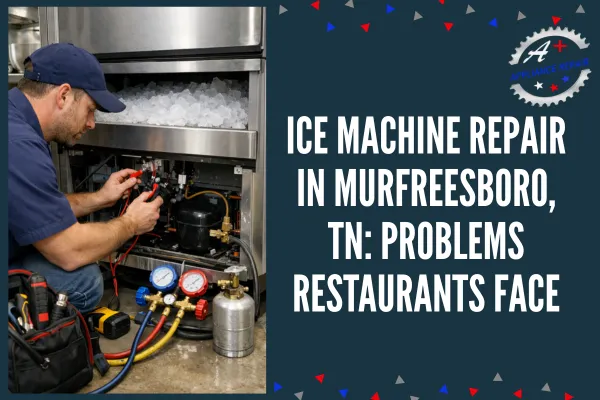
Ice Machine Repair in Murfreesboro, TN: Problems Restaurants Face
"When an ice machine fails, service slows, customers notice, and small problems quickly turn into big losses." - A+ Appliance Repair
Introduction: Why Ice Machines Are Mission-Critical for Restaurants
In modern food service, ice machines operate quietly in the background, yet their importance is immense. Ice supports beverage quality, food safety, presentation standards, and customer comfort. From soft drinks and cocktails to seafood displays and cold prep stations, ice is woven into daily restaurant operations. When it disappears, the ripple effects are immediate and unmistakable.
The Hidden Role Ice Plays in Customer Experience
Ice influences perception more than most guests realize. Crystal-clear cubes elevate drinks. Proper ice volume preserves flavor and temperature. Even the sound of ice in a glass signals freshness. When ice quality falters, customers notice—sometimes subconsciously, sometimes very clearly.
Why Ice Machine Failures Disrupt More Than Just Drinks
An ice machine failure slows service, stresses staff, and forces operational improvisation. Bartenders ration ice. Servers delay tables. Kitchens scramble to maintain safe temperatures. What begins as a mechanical issue quickly becomes a service breakdown.
Local Challenges Restaurants Face in Murfreesboro, TN
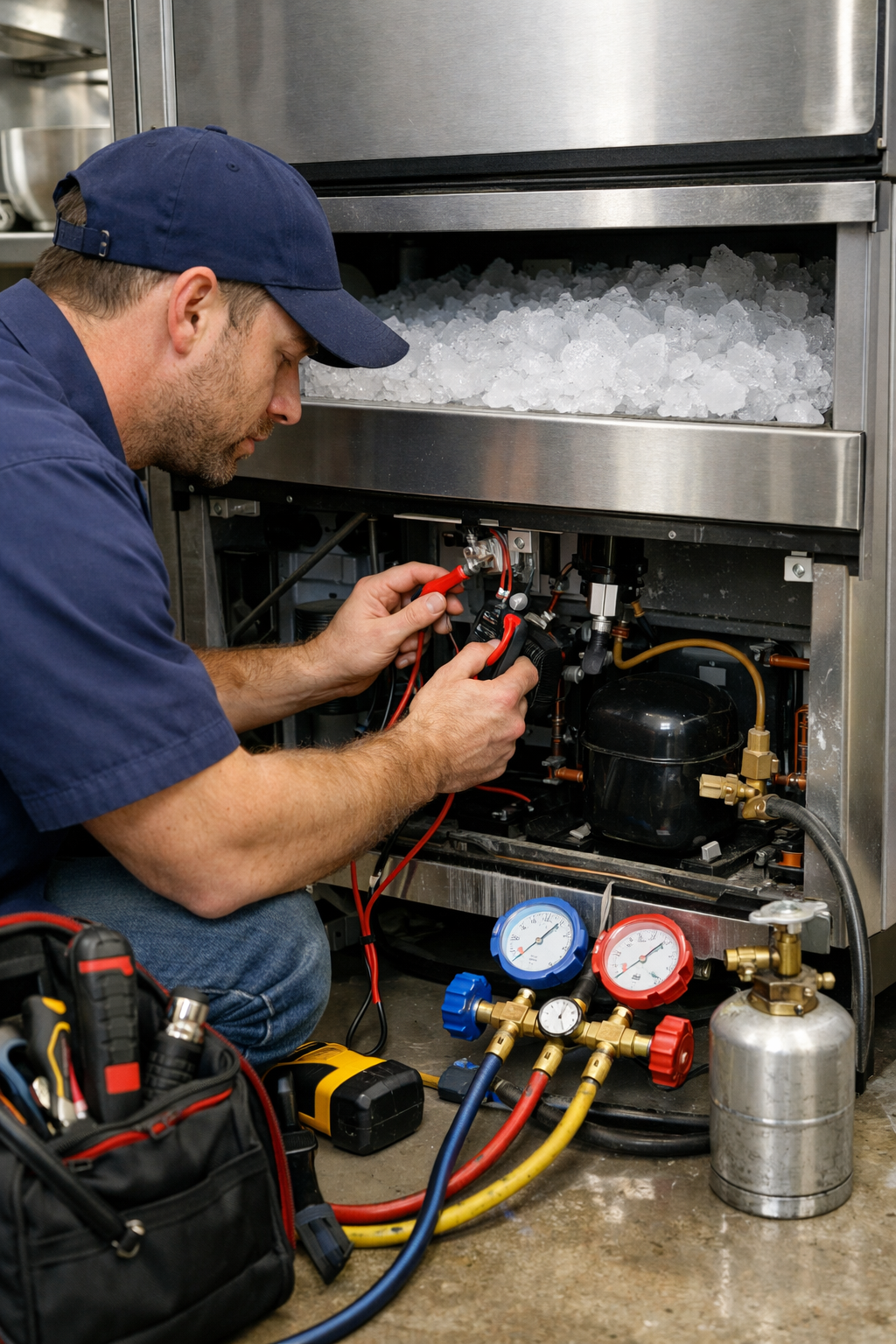
Local water hardness, humid summers, and high seasonal demand place added strain on commercial ice machines. Restaurants must contend with mineral buildup, increased cooling loads, and near-constant usage, all of which accelerate wear if not properly managed.
How Commercial Ice Machines Work
Commercial ice machines are precision systems designed to balance water, airflow, and refrigeration with remarkable consistency.
Key Components Inside a Commercial Ice Machine
Core components include the compressor, evaporator plate, condenser coils, water inlet valve, circulation pump, bin sensors, and control board. Each part plays a distinct role, and failure in one area often impacts the entire system.
The Ice Making Cycle Explained Simply
Water flows over a chilled evaporator surface. Ice forms gradually. Once frozen, a brief harvest cycle releases the cubes into the bin. The process repeats dozens of times per day, demanding exact timing and stable conditions.
Water, Airflow, and Temperature Balance
Efficient ice production depends on equilibrium. Restricted airflow, inconsistent water pressure, or ambient heat can disrupt the cycle and reduce output.
Types of Commercial Ice Machines Used by Restaurants
Undercounter Ice Machines for Small Kitchens
Compact and efficient, undercounter units suit cafés and limited spaces. They produce smaller volumes but require diligent cleaning due to tight airflow pathways.
Modular Ice Machines for High-Volume Restaurants
Modular systems generate large quantities of ice and pair with storage bins. These machines excel in busy kitchens but are sensitive to airflow and water quality issues.
Ice Dispensers and Beverage Station Units
Often found in self-service areas, these machines combine ice production and dispensing. They demand strict sanitation to prevent contamination.
Most Common Ice Machine Problems Restaurants Face
Ice Machine Not Producing Ice
Often tied to refrigerant loss, sensor failure, or blocked water flow.
Low Ice Production During Peak Hours
Usually caused by dirty condenser coils, scale buildup, or insufficient ventilation.
Ice Melting Too Quickly in the Bin
Indicative of bin insulation failure, air leaks, or faulty harvest cycles.
Ice Cubes Are Too Small or Misshapen
A sign of mineral scaling or inconsistent freezing temperatures.
Cloudy or Bad-Tasting Ice
Frequently linked to poor water filtration or internal contamination.
Ice Machine Leaking Water
Leaks often stem from cracked hoses, clogged drains, or valve malfunctions.
Ice Machine Making Unusual Noises
Grinding, humming, or rattling sounds may indicate failing motors or compressors.
Ice Machine Not Turning On
Electrical faults, control board issues, or safety switch activation are common culprits.
Causes Behind Ice Machine Failures
Hard Water and Mineral Scale Buildup
Minerals accumulate on evaporator plates, insulating them and reducing efficiency.
Dirty Condenser Coils and Poor Airflow
Dust and grease trap heat, forcing compressors to overwork.
Faulty Water Inlet Valves
Inconsistent water flow disrupts ice formation.
Malfunctioning Thermostats and Sensors
Inaccurate readings lead to improper cycling.
Electrical Component Wear and Tear
Relays, capacitors, and wiring degrade over time.
Improper Installation or Ventilation
Crowded placement restricts airflow and shortens equipment lifespan.
Food Safety and Health Code Risks
How Ice Machine Issues Affect Food Safety
Ice is considered a consumable product. Contamination risks mirror those of food.
Bacteria and Mold Growth Inside Ice Machines
Moist environments foster microbial growth when cleaning is neglected.
Health Inspection Failures Linked to Ice Machines
Inspectors frequently cite ice machines for sanitation violations.
Warning Signs Restaurants Should Never Ignore
Early Symptoms of Ice Machine Trouble
Slower production, odd smells, or inconsistent cube size.
When Small Issues Turn Into Major Breakdowns
Minor inefficiencies compound under constant use.
Ice Machine Maintenance Mistakes Restaurants Make
Skipping Regular Cleaning and Sanitizing
Deferred cleaning accelerates contamination and scaling.
Ignoring Manufacturer Maintenance Guidelines
Each model has specific service intervals that must be respected.
Overloading Ice Storage Bins
Excess weight stresses sensors and harvest mechanisms.
DIY Ice Machine Care vs Professional Repair
What Restaurant Staff Can Safely Handle
Basic cleaning, visual inspections, and filter changes.
Why Ice Machine Repairs Require Certified Technicians
Refrigerant systems and electrical components demand specialized expertise.
Risks of DIY Repairs on Commercial Equipment
Improper repairs can void warranties and worsen damage.
How Professional Ice Machine Repair Helps
Accurate Diagnostics and Faster Repairs
Technicians identify root causes, not just symptoms.
Preventing Repeat Breakdowns
Thorough repairs reduce recurring failures.
Extending the Life of Ice Machine Equipment
Proper service preserves performance and efficiency.
Ice Machine Repair vs Replacement
When Repair Makes More Sense Than Replacement
Younger machines with isolated issues often justify repair.
Signs It’s Time to Replace an Ice Machine
Frequent breakdowns, declining efficiency, and outdated technology.
Cost Comparison: Repairing vs Buying New
Long-term operating costs matter as much as upfront price.
Preventive Maintenance for Ice Machines
Benefits of Scheduled Ice Machine Maintenance
Improved reliability, cleaner ice, and predictable performance.
How Preventive Care Reduces Emergency Repairs
Routine service catches issues early.
Ideal Maintenance Frequency for Restaurants
Most operations benefit from quarterly professional maintenance.
Seasonal Ice Machine Challenges in Tennessee
Why Summer Is Hard on Ice Machines
High ambient temperatures and demand strain cooling systems.
Preparing Ice Machines for High-Demand Seasons
Pre-season inspections prevent mid-summer failures.
Choosing the Right Ice Machine Repair Company
What to Look for in a Commercial Ice Machine Technician
Certification, experience, and transparent service practices.
Importance of Local Experience in Murfreesboro
Familiarity with regional water conditions and usage patterns matters.
Questions Restaurants Should Ask Before Hiring
Response times, warranty coverage, and maintenance options.
How Ice Machine Downtime Impacts Revenue
Lost Sales and Slower Service
Drink delays reduce table turnover and bar efficiency.
Customer Satisfaction and Repeat Business Risks
Consistency builds loyalty. Disruptions erode it.
How Fast Ice Machine Repair Protects Operations
Reducing Downtime During Busy Hours
Rapid response limits service interruptions.
Keeping Kitchens Running Smoothly
Reliable ice supports workflow stability.
Ice Machine Repair for Different Restaurant Types
Quick-Service Restaurants
Speed and volume demand consistent ice output.
Bars and Beverage-Focused Businesses
Ice quality directly affects drink presentation.
Hotels and Event Venues
High-capacity systems require meticulous upkeep.
Why Local Restaurants in Murfreesboro Need Reliable Ice Machine Service
Local Water Conditions and Equipment Stress
Mineral-heavy water accelerates component wear.
High Competition and Customer Expectations
Operational excellence separates successful restaurants from the rest.
Conclusion: Staying Ahead of Ice Machine Problems in Restaurants
Ice machines rarely fail without warning. Recognizing early signs, prioritizing maintenance, and responding quickly to issues protects food safety, service quality, and profitability. Proactive care keeps restaurants prepared for peak demand and unexpected challenges.
Call to Action: Schedule Ice Machine Repair in Murfreesboro, TN
When your ice machine goes down, your entire operation feels it. From delayed service to food safety concerns, downtime is never an option for restaurants. Fast, professional ice machine repair keeps your kitchen running smoothly and your customers satisfied.
If your commercial ice machine is producing less ice, leaking, making unusual noises, or not working at all, expert service can restore performance and prevent costly breakdowns.
Schedule reliable ice machine repair in Murfreesboro, TN today.
📞 Phone: (629) 260-3232
📧 Email: [email protected]
Prompt diagnostics, experienced technicians, and commercial-grade repairs help protect your operations and your reputation.
Frequently Asked Questions About Ice Machine Repair
How quickly can ice machine repairs be completed?
Most commercial ice machine issues can be diagnosed during the initial visit. Many repairs are completed the same day, depending on the problem and parts availability.
Is it safe to keep using an ice machine that isn’t working properly?
No. A malfunctioning ice machine can create food safety risks, including bacteria or mold growth, and may lead to further equipment damage if left unresolved.
How often should a commercial ice machine be professionally serviced?
For most restaurants, professional cleaning and maintenance every three to six months is recommended to maintain performance and health code compliance.
Can Murfreesboro’s water quality affect ice machine performance?
Yes. Hard water and mineral buildup are common causes of reduced ice production and internal component failure without proper maintenance.
Should a restaurant repair or replace an ice machine?
Repair is often the best option for newer machines or isolated issues. Replacement may be more cost-effective for older units with frequent breakdowns or declining efficiency.
