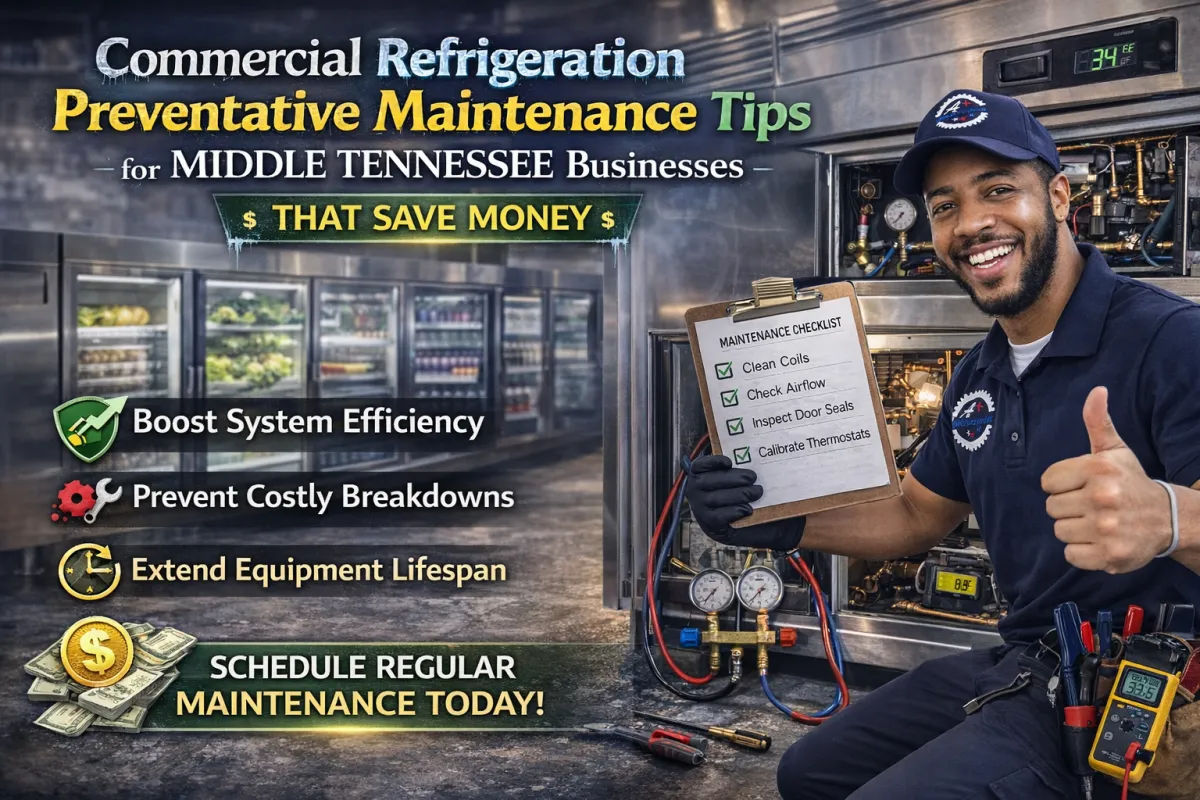
Commercial Refrigeration Preventative Maintenance Tips for Middle Tennessee Businesses That Save Money
Preventive maintenance isn’t just a task—it’s the key to keeping your commercial refrigeration running efficiently, protecting inventory, and saving Middle Tennessee businesses money. - Appliance Boss
Introduction
Commercial refrigeration is the lifeblood of restaurants, grocery stores, and food service operations in Middle Tennessee. Without consistent cooling, perishable inventory spoils, health risks increase, and revenue is threatened. Preventative maintenance is not just a recommendation—it’s an operational imperative. Regular attention to refrigeration systems ensures that minor issues don’t snowball into catastrophic failures, keeping businesses running smoothly and efficiently.
The True Cost of Neglecting Refrigeration Systems
Ignoring maintenance can lead to expensive repairs, early equipment failure, and even inventory loss. Broken compressors, leaking refrigerant, and failed defrost systems can halt operations for hours—or days. Beyond direct repair costs, there’s the hidden financial impact: lost sales, spoiled food, customer dissatisfaction, and potential health code violations. For Middle Tennessee businesses, the cumulative cost of neglect far outweighs the small investment in regular maintenance.
How Preventive Maintenance Saves Money Over Time
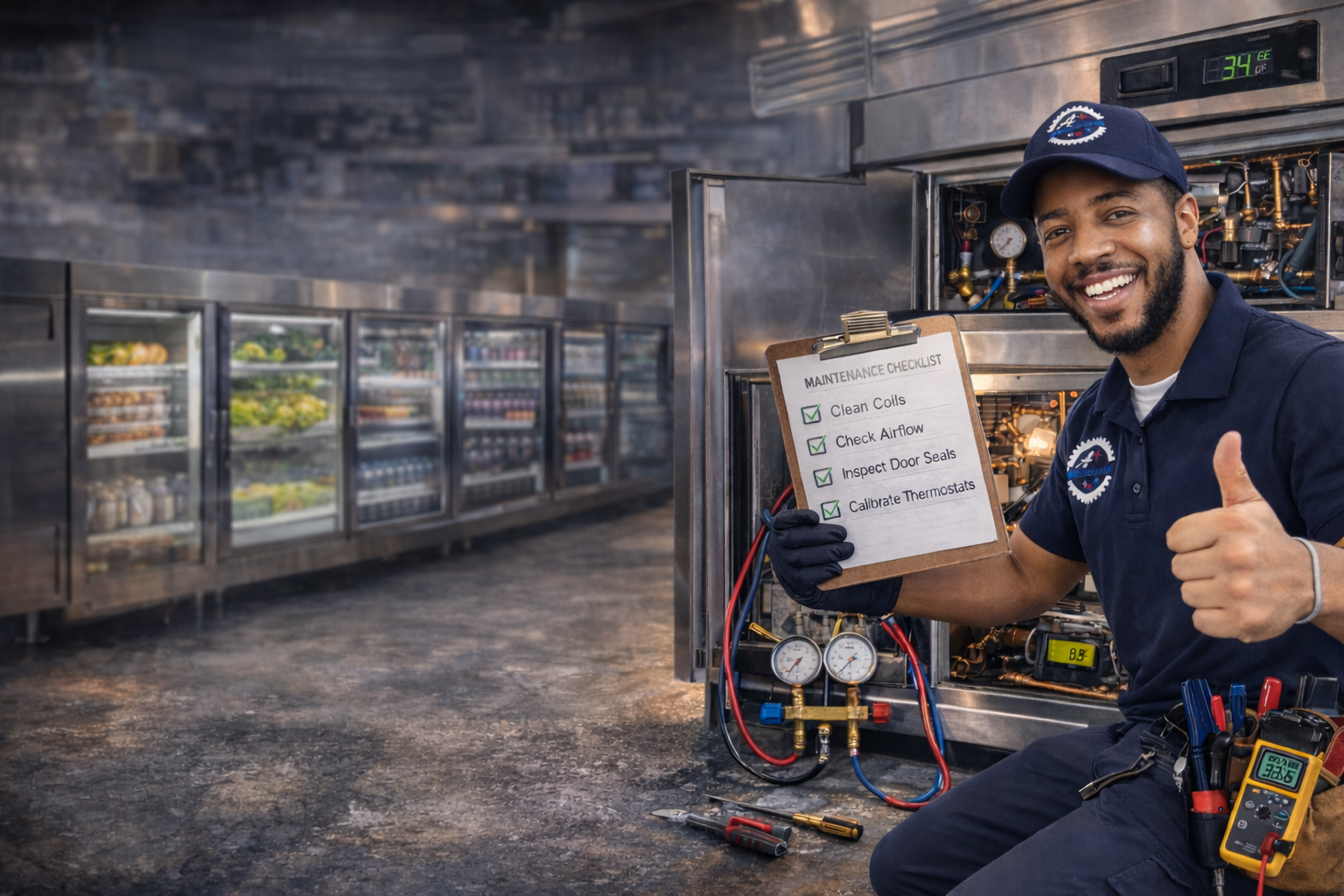
Preventative maintenance reduces the likelihood of emergency repairs, extends equipment lifespan, and improves energy efficiency. Simple measures, like cleaning condenser coils and checking refrigerant levels, prevent breakdowns and improve performance. Over time, the savings on energy bills, repair costs, and spoiled inventory far exceed the cost of routine service.
Understanding Your Commercial Refrigeration Systems
To maintain refrigeration effectively, you must first understand its components. Commercial systems differ from residential units, running continuously and storing large volumes of perishable items. Proper maintenance requires familiarity with compressors, evaporator coils, thermostats, fans, and door seals. Knowing how each part works together allows businesses to spot early warning signs before they become emergencies.
Types of Commercial Refrigeration Units Common in Middle Tennessee
Walk-In Coolers and Freezers
These large units store substantial volumes of food and beverages. They require constant temperature control, proper airflow, and regular coil cleaning to function efficiently.
Reach-In Refrigerators and Freezers
Common in kitchens and bars, these units are accessed frequently. Door gaskets, fans, and thermostats endure heavy use and require routine checks.
Undercounter and Prep Table Refrigeration
Smaller units support food prep stations. Although compact, they demand consistent maintenance to prevent mold, leaks, or uneven cooling.
Ice Machines and Beverage Coolers
Ice machines are particularly sensitive to water quality and scale buildup. Proper maintenance ensures consistent ice production and protects beverage quality.
Key Components That Require Regular Attention
Compressors and Condensers
These form the heart of cooling. Cleaning and inspecting them prevents overheating and mechanical failures.
Evaporator Coils and Fans
Clogged coils or blocked fans reduce efficiency. Regular inspection ensures proper airflow and optimal cooling.
Thermostats and Sensors
Faulty thermostats lead to temperature fluctuations, spoiling inventory. Calibration checks maintain accuracy.
Door Gaskets and Seals
Damaged gaskets allow warm air in, forcing compressors to overwork. Regular inspection preserves energy efficiency.
Daily Maintenance Tasks That Reduce Repairs
Checking Temperature Settings
Ensuring units stay at safe temperatures protects food and reduces stress on compressors.
Visual Inspections for Leaks or Damage
Early detection of leaks or mechanical wear prevents costly breakdowns.
Cleaning Exterior Surfaces and Door Gaskets
Wiping down units and seals prevents mold, dust buildup, and contamination.
Weekly Preventive Maintenance Checklist
Cleaning Condenser Coils and Vents
Removes dirt and debris to maintain airflow and efficiency.
Checking and Adjusting Airflow
Ensures cold air reaches all areas, preventing hot spots.
Inspecting Refrigerant Levels
Maintains proper cooling performance and prevents compressor strain.
Monthly and Quarterly Maintenance Tasks
Lubricating Moving Parts
Reduces friction and mechanical wear.
Testing Defrost Systems
Ensures ice buildup does not compromise efficiency.
Checking Electrical Connections and Control Boards
Prevents unexpected electrical failures that can shut down units.
Seasonal Maintenance Tips for Middle Tennessee Businesses
Preparing Refrigeration Systems for Summer Heat
High temperatures increase energy demand; clean coils and check fans to prevent overheating.
Winter Checks to Ensure Efficient Cooling
Inspect insulation, gaskets, and defrost systems to maintain performance during cooler months.
How to Spot Early Warning Signs of Failure
Strange Noises or Vibrations
Unusual sounds may indicate failing compressors, fans, or motors.
Inconsistent Temperature or Ice Production
Fluctuating temps or slow ice production signals system inefficiencies.
Frost Build-Up and Leaks
Excess frost or leaks suggest clogged drains, failed defrost cycles, or refrigerant issues.
Benefits of Scheduled Professional Maintenance
Accurate Diagnostics and Preventing Emergencies
Certified technicians catch minor issues before they escalate.
Extending Equipment Lifespan and Efficiency
Regular service keeps systems running longer with lower energy consumption.
Compliance with Health and Safety Codes
Professional maintenance ensures units meet local regulations, reducing inspection risks.
Cost Comparison: Repair vs Preventative Maintenance
How Small Investments Prevent Large Expenses
Routine checks cost less than major repairs or full replacement.
Avoiding Lost Revenue Due to Equipment Downtime
Preventative care reduces interruptions in service and lost sales.
Tips for Training Staff on Proper Maintenance Practices
Assigning Responsibility for Daily and Weekly Checks
Clear accountability ensures maintenance tasks are completed consistently.
Creating a Maintenance Log for Accountability
Logs document inspections, cleaning, and service visits, providing a record for compliance and warranty purposes.
The Role of Water Quality and Local Conditions
Hard Water Effects on Ice Machines and Cooling Systems
Mineral buildup reduces efficiency and can damage components.
Impact of Tennessee Humidity on Refrigeration Efficiency
High humidity increases condensation, requiring more frequent coil and fan maintenance.
Energy Efficiency and Sustainability Considerations
How Clean Components Lower Energy Bills
Efficient systems consume less electricity and reduce operational costs.
Environmentally Friendly Refrigerant Practices
Proper maintenance prevents leaks and supports eco-friendly refrigerant use.
Choosing the Right Maintenance Partner in Middle Tennessee
What to Look for in a Commercial Refrigeration Technician
Experience, certifications, and local knowledge ensure reliable service.
Questions to Ask Before Scheduling Preventive Service
Ask about service frequency, emergency response, and cost-saving strategies.
Conclusion: Keep Your Business Profitable with Smart Refrigeration Maintenance
Regular preventative maintenance safeguards inventory, reduces energy costs, and avoids costly repairs. Businesses in Middle Tennessee benefit from disciplined, proactive care that keeps operations running efficiently.
Call to Action: Schedule Professional Preventive Maintenance in Middle Tennessee
Keep your commercial refrigeration in peak condition. Schedule a service with trusted experts today.
📞 Call: (629) 260-3232
📧 Email: [email protected]
🌐 Website: https://a-plusappliancerepair.com/home
Frequently Asked Questions (FAQs)
What is preventative maintenance for commercial refrigeration?
Preventative maintenance involves regular inspections, cleaning, and adjustments to refrigeration units to prevent breakdowns, ensure efficiency, and extend equipment lifespan.
How often should Middle Tennessee businesses schedule maintenance?
Daily, weekly, and monthly checks are recommended, with professional preventative maintenance at least twice a year, or more frequently for high-volume operations.
What are the benefits of preventative maintenance over emergency repairs?
Preventative maintenance saves money, reduces downtime, prevents spoiled inventory, improves energy efficiency, and ensures compliance with health and safety regulations.
Which components require the most attention during maintenance?
Key components include compressors, condensers, evaporator coils, thermostats, fans, door gaskets, and water filters in ice machines and beverage coolers.
How does water quality in Middle Tennessee affect refrigeration systems?
Hard water and mineral deposits can reduce efficiency, damage components, and increase cleaning frequency for ice machines and cooling systems.
Can restaurant staff perform preventative maintenance themselves?
Staff can handle daily visual inspections, cleaning door gaskets, and monitoring temperatures. However, professional service is required for deep cleaning, refrigerant handling, and electrical diagnostics.
How does humidity affect refrigeration performance?
High humidity increases condensation, which can overload cooling systems, promote mold growth, and reduce efficiency, especially during Tennessee summers.
What signs indicate my refrigeration system needs immediate attention?
Strange noises, inconsistent temperatures, ice machine issues, frost buildup, leaks, and unusual odors are early warning signs.
How does preventative maintenance improve energy efficiency?
Clean coils, properly sealed doors, and well-lubricated components reduce energy consumption by allowing units to run efficiently.
Why should I choose a local Middle Tennessee refrigeration service provider?
Local technicians understand regional water conditions, climate challenges, and compliance requirements, ensuring faster response times and more reliable service.
